Monday, December 29, 2008

Birds

One of the best parts of my math journey has been the unexpected. Sometimes, related to math, often not.

The white wooden desk where I study when I'm in Kino Bay, Sonora sits is in a nook in the bedroom facing a window. It overlooks an estuary. There is a parking lot between my room and the estuary and there are a couple of poles in the lot. It feels good to be here and it is good for daydreaming and just getting generally distracted.

Yesterday I was at the desk alternating with trying to get an intuitive feel for functions and trying how to enter, graph, and interpret functions with my new TI-84 calculator when I looked out and noticed an osprey land on the pole nearest to my window. That was  more interesting than f(x)=some equation with strange symbols in it.

After a few seconds, another osprey came up behind it and the first one took flight making room for the new one. Soon four osprey were playing a noisy game of musical chairs with that one pole as the prize. They circled high above the estuary, seemed to confront each other, and then one would land on the pole, just to be moved off by the next bird to take a turn. 

I couldn’t tell whether it was simply a game – teenage osprey just hanging out -- or if something more violent was going on. There didn’t seem to be anything real at stake. No fish, no nest. Just fifteen or seconds of squatting rights on a random white pole in a parking lot.

After about 30 minutes and a couple of photographs, I forced myself to turn back to my algebra book. But first I wondered whether mathematicians could even begin to describe the beauty of a bird’s flight or the playful interaction I had just watched from my window. Then I thought, if they can, I want to learn how. But if they can’t, then maybe math is nothing more than a tool for engineers and accountants, a tool that I don't really need.

But then, if I hadn’t been learning about how to plot a quadratic function, I wouldn’t have seen that dance in the sky in the first place.

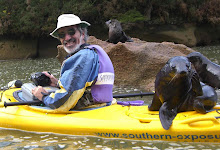
Here are two of the pictures I took.


Thursday, December 25, 2008

Looking Ahead

Even though it’s winter break, I’m already looking ahead to college algebra.

But, it took a few steps before I could get started.

First, I had to prove I was a citizen.
.
The country (and university) has gotten so nutty.  Even though I was a student here nearly 40 years ago and I’ve been an employee for about 25 years and have three degrees from the school and I have been on its computer system from the time there was a computer system, I still needed to take my passport and show it to a lady in the administration building so she could tell the computer that I was a citizen and it was OK for me to take math 112 and not have to pay out of state (or country) tuition.

Then I figured out that the HP calculator that served me so well last semester wasn’t allowed this semester. It is too good. Heaven forbid that students get to use the best tool for the job. Might make us lazy. So, the calculator of choice for lower level math classes is the Texas Instruments 84+ Silver Edition. So, on to craigslist I went.

There were several to choose from. Plenty of students had just gotten their grades and were celebrating never having to take another math class by selling their TI 84s cheap. I arranged to meet Tristian at a park, just before a Hanukah party Gail and I were going to. It made me kinda nostalgic. The rendezvous at the agreed-on location, in the semi-darkness. He had the stuff. I had the cash. He had a tough looking SUV. I had my girl (Gail) in the car. Money changed hands and we left. I hadn’t done anything like that since I was sixteen.

Actually, Tristian was a nice young person who was hoping to become a math teacher some day, preferably at the college level. He had bought the calculator used from someone else and now it was my turn. He wished me good luck and I did the same to him.

The textbook, at first glance didn’t look nearly as intimidating as the text did last semester. At least now I know some of the language and have some clue about what words like functions and inequalities mean in a math environment.

Unfortunately though, this book doesn’t have any online or CD support, just a pretty crummy “solutions manual” that I bought used for $21. That is going to be a problem. Last semester, the online drills and examples and animations walking me through problems and the movies working step by step through specific problems worked wonders for me. Learning math the 19th century way I think will be a lot harder.

It surprises and disappoints me that the community college is using more modern (and beneficial) teaching techniques than my famous Research I university. And it also tells me how much trouble we’re in when the university can’t even afford computer blackboards in its math classrooms and Seth has one at the high school where he teaches.

I jumped into the first chapter and read through the first section. I thought I “got it” until I began to do some of the practice problems. I didn’t get a single one right, but did understand the solutions in the workbook. I suppose that’s something.

Why do this?

I still don’t have an answer. I wonder if I ever will. I wonder if I need to. It’s not fun, but I like it. I imagine what I am getting out of the process now feels the same as people feel when they do crossword puzzles.  It feels good to get one done. And someday they will be able to move up to the Thursday puzzle from the Wednesday puzzle.

I’m still curious about what comes next and what I will learn. I like my new calculator toys and learning how they work. I really enjoy meeting people I would never have met if I didn’t enter this world. And I don’t know enough about that world to even have a guess about what doors a little knowledge of math might reveal or even open.

Sunday, December 21, 2008

Beginning of Chapter Two

Hello again. I've been taking a breather both from math and my own classes.

Since I last posted I did a four day three night backpack in the Grand Canyon. The trip was great, even though I had to spend 14 hours in my tent during the snow storm. And on the hike out we started in the dark in the rain which quickly turned to snow and spend the next seven hours hiking through white stuff. Before it got totally socked in about two miles from the rim, the snow covered Canyon was truly magical.

Right now, it's hard to say whether I can even claim, "one down and plenty to go. " I don't get any college credit for the course I just finished, but it did give me the ticked to enter my first ever college level math course, "College Algebra," or UA Math 112.

I did go back and forth for awhile. Next semester, in addition to teaching my own classes, I will need to get more involved in committee work.

And, I need to train for this summer's Bicycle Tour of Colorado and RAGBRAI, the ride across Iowa. Not to mention hiking, photography, other writing projects, and reading.

But still, I want to some day "get it" about calculus and other stuff.

So, I decided to commit to Math 112.

By some good luck, the section I wanted (MWF 11:00 a.m.) was still available so I signed up. Still need to pay.

My teacher is going to be Michael A. Bishop, a math doctoral student.

The textbook is College Algebra by Warren L. Ruud and Terry L. Shell. And there is a solutions manual.

When I went to buy my textbook, the cashier recognized me from the Journalism School. Turns out she is a junior journalism major named Porcha (sp?) pronounced like the car. She is of Ethiopian descent and Jewish. I can't wait to hear more about her.

The textbook publisher's name caught my eye. It is Pearson Custom Publishing. They seem to be a high class self publishing house that specializes in textbooks. I wonder whether Ruud and Shell are or were from the UA.

Friday, December 5, 2008

End of Chapter One

Well, I woke up this morning to find this email note from Professor John Lapeyre waiting for me:
------------------

final 102
course 95
course A

Highest score in either section.
There was one who scored 100.
Thats serious 'most improved'.

Have fun with the rest of the semester.

Best,
John

------------------

A nice way to start the day.

I thought I had done well on the final, but not that well. O.K., so now it's on to the next class, I hope.

Reflecting back, I've enjoyed the semester a lot. Learning new things is always stimulating, but I also am grateful for the chance to meet inspiring people such as Professor Donald Saari and Dr. Jerry Droege and my many classmates.

And it really was a pleasure to have Prof. Lapeyre as a teacher. I'm sure he would rather have been just about anywhere other than in a classroom full of 18-year-olds who hate math and didn't want to be there for a second. I hope he found my presence and naive (and weird) enthusiasm to be amusing, if not refreshing.

Seth is pretty much assuring me that even though I did well enough in this class, I still may not be quite prepared for college algebra. I hope I can find out. I plan to spend a good part of Christmas break going through the lots of stuff in the text book that there wasn't time to cover during the semester.

A few catch up thoughts as this first part of my journey ends:


Students and math

The main thing I noticed about the kids in math class who weren't going to pass or were just barely going to pass is that they hadn't made the transition to realizing that their education is their responsibility, to the teacher's.

They were quick to blame John for their "not getting it." I think John did what he could. Sure, he could have been better in a whole lot of ways, but that shouldn't matter. Today, between tutoring centers at both the University of Arizona, Pima Community College, a good textbook, and CDs and an excellent Web site, the help was there.

I hope it (personal responsibility, not necessarily math) clicks for them.


The book

A funny thing happened on the way to learning high school algebra II in college. I really started to enjoy it and because I did, when I had some time, I found myself wanting to learn new math things rather than think about a book proposal or even consider the time it would take to actually write "The Minimalist Math Book for Journalists."

And, after getting a dose of reality from Lauren Miller, a former UA journalism student who is now working in both marketing and acquisitions for a textbook publishing firm in Scottsdale, I figured out that I was not that interested in performing what is essentially a labor of love, especially one that wasn't particularly needed. I'm letting that idea rest for now.

However . . .

String theory

String theory is some obscure physics idea describing sub atomic particles (or something) that is probably not true anyway.

For journalists, "string" is something completely different. String is (are?) the bits and pieces of sometimes random information or thoughts that relate to what could someday, possibly, be a book or an article.

Here's an example. Tom Miller noticed this and sent it to me.

From Jim Harrison's Returning to Earth (2007), p. 183:

Part of me was the university sophomore who reads Dostoevsky's statement "Two plus two is the beginning of death" and never gets over it.

But -- that only pulls up a few Google references.

Both are from Harrison.

The other, curiously, is from his 2005 book, True North, which has the following:

I was startled reading in a Sprague journal the quote from the Constance Garnett translation of Dostoevsky that said, "Two plus two is the beginning of death.

"Every other cite for the quote has it more benign, as I sent to you before: I admit that two times two makes four is an excellent thing, but if we are going to praise everything, two times two makes five is sometimes also a very charming little thing.

Next time I see Harrison (4:30 pm, any afternoon, The Wagon Wheel, Patagonia, on the W end of town) I'll call him on this.

Tom Miller Tucson, Arizona
www.tommillerbooks.com

---------------------------------------

So, I am collecting string.

Will it become anything? That's one thing about string. You never know, but you collect it anyway.